Home › Services
Pool removal in Baton Rouge and the Capital Region, from fill-in to full haul-out
A backyard pool in south Louisiana earns its keep for a few summers and then, for a lot of owners, turns into a chore: chemicals, a pump that hums all night, a liner that fades, leaves and limbs after every storm. Taking it out is real construction work. The water has to go somewhere sensible, the electrical and plumbing have to be shut down properly, the shell has to be broken or hauled, and the hole has to be filled in a way that will not sink into a puddle two wet seasons later. This page walks through how pool removal works on Capital Region clay, what separates a fill-in from a full removal, and what to ask before anyone brings a machine into your yard.
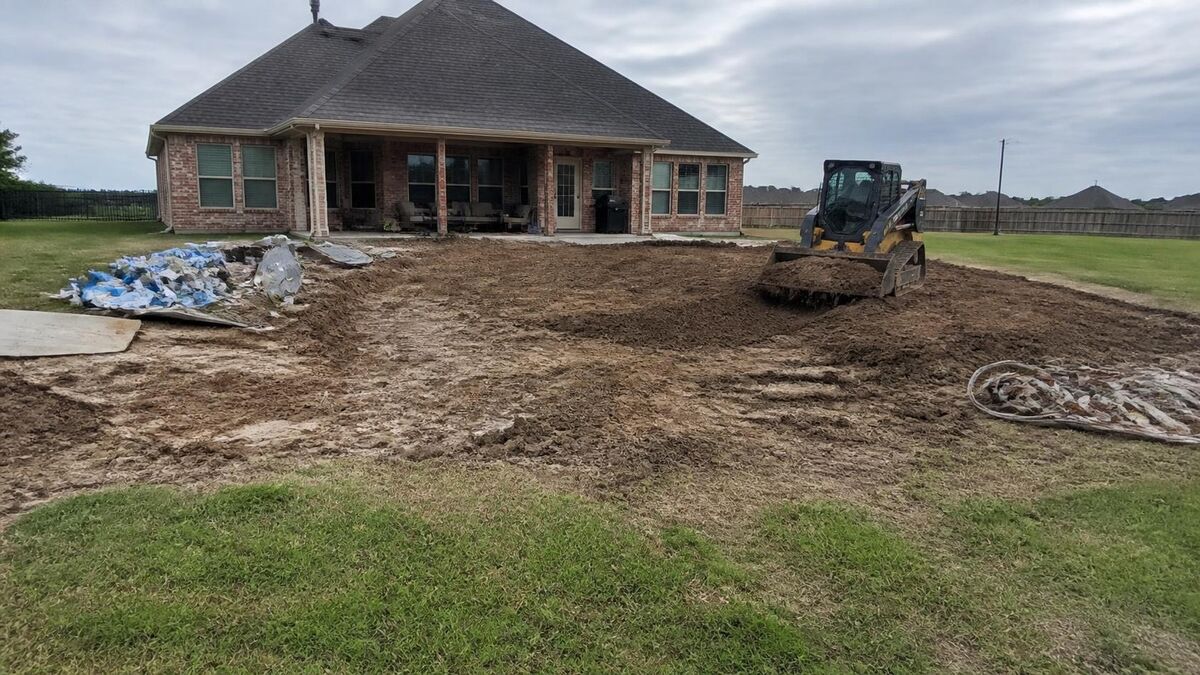
Why owners around Baton Rouge decide the pool has to go
Most people do not wake up one morning and decide to tear out a pool. Something tips it: the plaster is stained, the deck has heaved where clay swelled under it, and the repair estimate looks like a new pool. Or a hurricane dropped a pine across the screen enclosure and the owner would rather have the lawn back.
Buyers drive plenty of removals too: someone purchases an older house, finds a green, cracked pool that has not run in years, and wants it gone before moving in. Whatever the reason, the method should follow what you want that part of the yard to do next.
How the type of pool changes the removal
The material the pool is built from decides how it comes apart, what kind of debris leaves the property, and how much work sits in the hole before fill can go in.
- Gunite or shotcrete concrete pools: thick, steel-reinforced shells that a hydraulic breaker on an excavator chips apart. This is the heaviest debris and the most hauling, and the concrete usually heads to a crushing yard for reuse as base rock.
- Fiberglass pools: a one-piece molded shell. It is often cut into sections and lifted out, or broken in place for a partial job. Fiberglass does not recycle the way concrete does, so it is hauled to a landfill or transfer station.
- Vinyl liner pools: the liner is cut out, then the steel or polymer wall panels and their bracing are unbolted or cut. Many also have a concrete collar around the walls to break. Steel panels go to scrap.
- Above-ground pools: the lightest job. The water is pumped down, the liner removed, the wall and frame taken apart, and the sand or foam base raked out. Most come out with hand tools and a trailer.
Partial removal versus full removal
With a partial job, which some people call abandoning or filling in the pool, the bulk of the shell stays buried. Workers knock down the upper wall section plus the coping and bond beam, fracture the floor in several spots so rainwater soaks away instead of pooling underground, drop the rubble into the deep end, and pack fill in lift by lift.
A full removal takes the entire shell out. All of the shell, concrete, fiberglass or steel, is broken and hauled off, the pit floor is scraped clean, and engineered fill goes back in one measured layer at a time. Nothing stays buried, which is what a future builder or buyer wants to hear.
Partial removal involves less hauling and fewer truckloads, so it usually costs less and moves faster. Full removal is more work, but it removes the long-term question of what is under the grass.
Questions that point you toward one method or the other
Before you settle on a method, think through how the yard will be used for the next ten or twenty years.
- Will anything with a foundation ever sit on that spot? A room addition, garage, workshop or pool house on top of a buried shell is asking for trouble, and many designers and building reviewers will want the old shell gone.
- Are you likely to sell in the next few years? Some buyers, lenders and home inspectors react badly to a filled pool left in place, especially when there are no records of how it was done.
- What does the city-parish or your homeowner association expect? Some accept either approach with an inspection.
- How tight is access? A narrow side yard limits the machine and truck that can reach the pool.
Draining a pool on wet clay ground
In much of the Capital Region the water table rides high for long stretches of the year, and the native clay holds water like a sponge. An in-ground concrete or fiberglass pool that is emptied during a rainy stretch can be pushed upward by the groundwater around it. So an empty pool should never sit for long.
Where the water goes matters too. Dumping a pool full of chlorinated water onto a neighbor's lot or straight into a ditch is the kind of thing that draws a complaint. The usual practice is to let the chlorine drop off, then pump slowly to the sanitary cleanout or an approved outlet the city-parish allows, keeping the discharge off neighboring property. The contractor should explain the plan before the hose goes in.
Shutting down the electrical, gas and plumbing that feed the pool
A pool has more hidden connections than most people realize. There is a dedicated circuit to the pump and filter, often a separate one for lights and a heater, a grounding wire tied into the steel around the shell, and sometimes a gas line to a heater. Plumbing runs from the skimmers and main drain to the equipment pad and back through the return lines.
Have an electrician kill the pool's breakers and pull or cap off the wiring, so no energized cable is left underground. If a gas heater is present, the gas supply is shut off and capped by a plumber or the gas company. The equipment comes off the pad and the lines are cut and plugged. Before any digging around the pool, a call to Louisiana 811 gets public utility lines marked so the excavator stays clear of them.
The sequence of a typical in-ground pool removal
Every yard is different, but most concrete pool jobs move through the same order of work.
- Walk the yard, look at access, measure the pool and talk through partial versus full removal.
- Pull the permit if the city-parish or parish requires one and arrange any inspections it calls for.
- Disconnect power, gas and plumbing at the equipment, and have Louisiana 811 mark public lines.
- Open a path for the machine and lay protection over the lawn and driveway.
- Drain the pool in a controlled way, timed close to the start of breaking.
- Remove the deck, coping and equipment pad, then break the shell with a hydraulic breaker.
- For a partial job, break the upper walls and perforate the floor; for a full job, load out the entire shell.
- Bring fill back in stages, packing down every stage, and test it when a building may go there later.
- Top it with soil, slope the surface so runoff moves toward the yard and not the house, then plant grass seed or lay sod.
- Get the final inspection signed off and file the paperwork.
Fill and compaction are where pool removals succeed or fail
The breaking is the loud part, but the backfill is the part you will live with. Loose dirt dumped into a hole will settle for years, leaving a shallow bowl that holds water every time it rains. On heavy clay that bowl stays soggy and kills grass.
The sound method is to spread the fill thinly and pack it using a vibrating plate, a smooth roller or a sheepsfoot drum, finishing one layer before adding another. Material matters too: wet clay is hard to pack, so many contractors bring in select fill that compacts predictably. On a full removal where something will be built later, a geotechnical engineer may test the layers as they go in so there is a record that the ground was brought back to a buildable condition.
Decks, coping, enclosures and the equipment pad
The pool itself is only part of what comes out. The deck, the coping, the slab under the pump and filter, a diving board base and any screen enclosure all need a decision; enclosure aluminum is usually scrapped. Some owners keep part of the deck as a patio; others want every bit of concrete gone. If you plan to keep a portion, the contractor should saw cut a clean line where it ends rather than snapping it with the breaker. Larger driveway or patio slabs elsewhere on the property are a separate job covered on the concrete removal page.
Permits, inspections and telling the next buyer
Whether a pool removal needs a permit depends on where you live. In East Baton Rouge the consolidated city-parish handles it; in Ascension and Livingston parishes or in cities like Denham Springs and Zachary, the local permit office sets its own rules. Many want to see the hole before it is filled, or to look at the drainage openings in the floor on a partial job. Your homeowner association may also want to know.
When you sell, Louisiana's property disclosure process gives you a reason to keep records. A buyer, an appraiser or a home inspector may ask where the pool was and how it was filled. Permit records, inspection notes, photos taken during the work and any compaction test results answer that question cleanly. A filled pool with no paperwork is the version that makes buyers nervous.
Using the old pool area later, and what moves the price
Once the shell is fully gone and the fill compacted and tested, the ground usually works like the rest of the yard: grass, flower beds, a patio, a swing set or, after an engineer weighs in, a building. After a partial removal, lawn and light landscaping are the safe bet; heavy patios, sheds on slabs and anything with a footing deserve a conversation with a builder before they go on top.
Price depends on what the contractor finds when they walk the yard. The biggest drivers are listed below, and every one is assessed in person before a number is given. To get started, post the property address plus a handful of yard photos on the contact page so a Capital Region contractor can review it. Pool removals are common across the area, from older lots in Baton Rouge to newer subdivisions in Prairieville.
- Pool type and size, and whether the shell is concrete, fiberglass, vinyl or above-ground.
- Partial fill-in versus full removal of the shell.
- How much decking, coping, enclosure and equipment pad comes out with it.
- Access for machines and trucks, including gates, fences, side yards and soft ground.
- The amount and type of fill, and whether layer-by-layer testing is needed.
- Disposal: concrete to crushing, metal to scrap, everything else to a landfill or transfer station.
- Permits, inspections, utility disconnects and final topsoil, grading and seed or sod.
Pool removal in Baton Rouge and the Capital Region — common questions
Which costs less, burying a pool in place or hauling the whole shell out?
A fill-in, where the top of the shell is broken and the rest is buried, almost always takes less labor, fewer truckloads and less imported fill than hauling the whole shell away, so it generally comes in lower. Full removal costs more up front but leaves nothing in the ground, which can matter later for building plans or a sale. The only way to know the gap on your property is to have a contractor see the pool, the access and the amount of decking involved.
Can I build on top of a pool that was filled in?
It depends on how the pool was filled and what you want to build. Lawn, garden beds and light landscaping are fine over a well-done partial fill-in. A room addition, garage or slab-on-grade shop is a different matter: most builders and building reviewers will want the old shell removed and the fill placed and tested in layers, so the ground supports a foundation evenly. Talk to the builder or a structural engineer before choosing the removal method if a structure is even a possibility.
Will the ground sink where my old pool was?
Some minor settling at the surface is normal over the first season, especially after hard rain, and a careful contractor leaves the area slightly crowned to allow for it. Serious sinking usually traces back to fill that was dumped in thick loads without proper compaction, or to wet clay that was pushed in and never packed. Ask how each layer will be compacted before work starts.
Do I have to tell buyers that my house had a pool?
Louisiana sellers fill out a property disclosure, and a filled-in pool is the kind of condition buyers, appraisers and inspectors ask about. Keep the permit, inspection sign-off, photos from the work and any compaction test results. If you are unsure what to disclose, a real estate attorney or your agent can tell you how it applies to your sale.
Where does all the pool water go before demolition?
The water is usually left to sit until the chlorine level falls, then pumped out slowly to a sanitary sewer cleanout or another outlet the local government allows. It should never be dumped onto a neighbor's yard or sent in a rush down a ditch. Draining is timed close to the start of breaking, because an empty shell on saturated clay can be shoved upward by groundwater pressure.
How long does an in-ground pool removal usually take?
The demolition and fill on a typical residential pool is usually a fairly short stretch of hands-on work, but the calendar depends on several things outside the crew's control: when the permit is issued, how fast inspections happen, how long draining takes and whether a stretch of rain turns the yard to mud. The contractor should give you a realistic sequence after seeing the yard rather than a promise over the phone.
Talk through your site
Start with the address, what needs to come down, and a few photographs of the structure and the access to it.
Related work
House Demolition
Full teardown of a house down to a clean lot, with the slab or piers removed and utilities handled first.
Garage and Shed Demolition
Detached garages, carports, sheds, barns and decks taken down and hauled off without rutting the yard.
Interior Demolition
Flood-damaged rooms, kitchens and baths gutted down to the studs, protecting what stays.
Concrete Removal
Cracked driveways, patios, walks and slabs broken up and hauled off, with the base ready for what comes next.
Across the metro
Baton Rouge
The city itself: older neighborhoods near downtown and the university, raised cottages and infill lots.
Prairieville
Fast-growing community to the south with newer slab houses, big lots, pools and shops.
Denham Springs
River city to the east hit hard by the 2016 flood, with gutted houses, raised rebuilds and old sheds.
Zachary
Northern community with acreage, barns, sheds and older farmhouses beside new subdivisions.